Call for help?
1300 762 021
24/7 Service availability!
Ready to Serve You Day or Night
Call for help?
1300 762 021 24/7 Service availability!
Ready to Serve You Day or Night
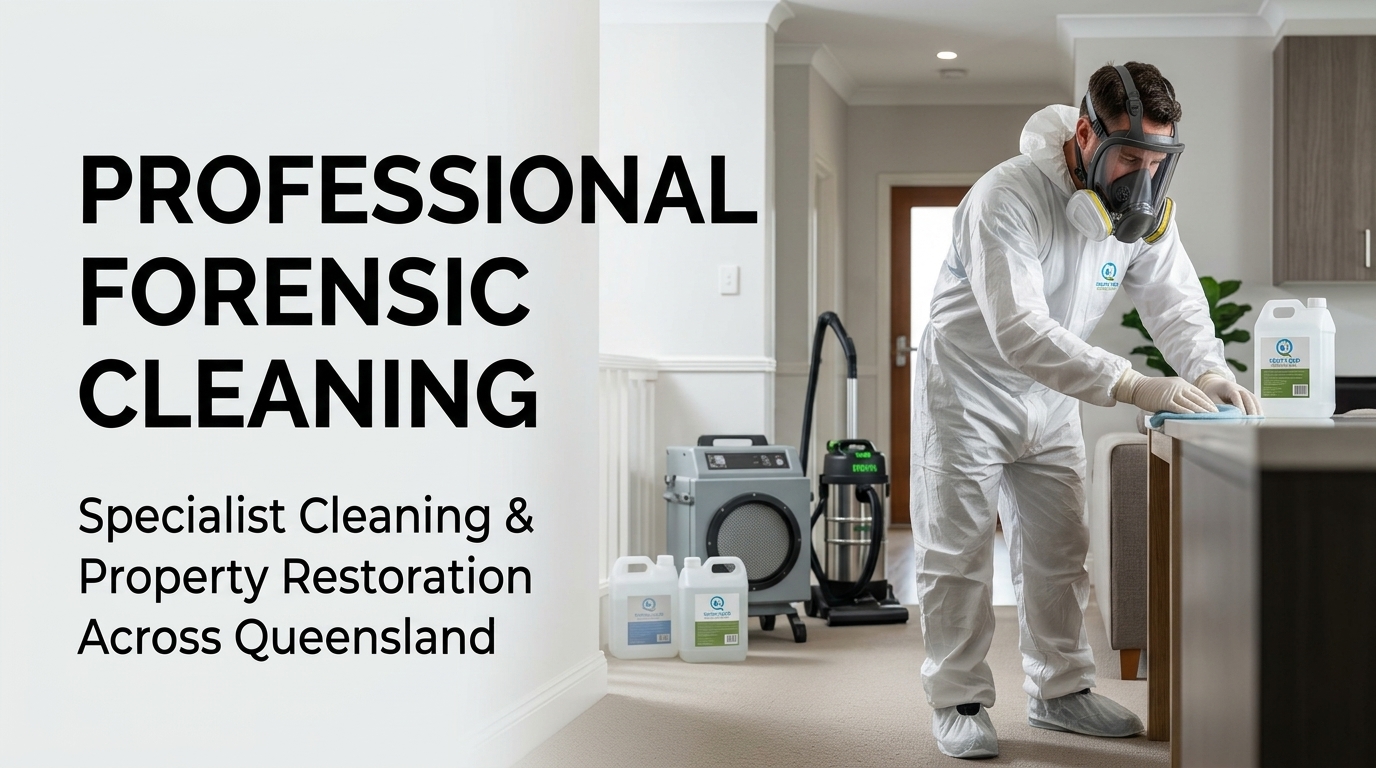
When a property is affected by a serious incident, restoring the space requires more than conventional cleaning. Professional forensic cleaning involves assessing potential contamination risks, selecting appropriate remediation methods and managing affected materials with care.
Across Brisbane, the Gold Coast, Sunshine Coast and other Queensland communities, property owners and managers may need specialist cleaning support following incidents involving biological contamination or hazardous residues. Understanding the cleaning process, associated risks and available restoration options can help property owners make informed decisions.
Forensic cleaning is a term commonly used for specialist cleaning following incidents that may leave biological contamination or other hazardous residues. It can overlap with trauma cleaning and biohazard remediation, although the exact scope of work varies depending on the provider and circumstances.
Unlike routine cleaning, forensic cleaning focuses on managing potential exposure risks, preventing cross-contamination and supporting the safe recovery of affected spaces.
These services may be required in residential properties, workplaces, rental properties and other occupied buildings.
Several situations may require professional assessment and specialist cleaning services.
Following a distressing incident, affected areas may require specialist assessment and controlled cleaning. These situations require careful handling, privacy and clear communication with property owners and authorised parties.
A professional approach should consider the condition of the property and the appropriate steps needed to manage potential contamination.
Blood and bodily fluids may contain potentially infectious biological materials. The appropriate cleaning approach depends on the nature of the contamination and the surfaces or materials affected.
Ordinary surface wiping may not adequately address contamination that has penetrated porous materials, flooring or concealed areas.
Properties left unattended following serious incidents can present complex cleaning and odour-management challenges.
A professional assessment helps determine which areas can be cleaned, which materials may require removal and whether additional restoration services are necessary.
Some properties may contain accumulated waste, animal contamination or other unsanitary materials.
Not every neglected property requires forensic cleaning. However, specialist intervention may be appropriate when biological exposure risks or other significant contamination concerns are identified.
Potentially hazardous materials can affect absorbent flooring, furnishings and building finishes. The visible condition of a room does not always reveal the full extent of contamination.
A risk-based cleaning approach considers several factors, including:
Appropriate cleaning and waste management can help reduce avoidable exposure, support decisions about salvageable materials and prepare a property for subsequent repairs or reoccupation.
The appropriate scope of work should always be determined following a site assessment rather than relying on assumptions about the visible condition of the property.
Professional forensic cleaning generally involves several stages. The specific procedures depend on the incident, identified risks and condition of the affected property.
The first step involves assessing the affected area to identify potential hazards, access requirements and the likely extent of cleaning.
A clear scope of work should outline the proposed cleaning methods, any limitations and whether additional specialist services may be necessary.
Depending on the incident, cleaning work may require restricted access, suitable personal protective equipment and measures to minimise cross-contamination.
Safety controls should reflect the specific risks identified during the assessment rather than relying on a standard checklist for every situation.
Cleaning methods are selected according to the affected surfaces and materials.
Materials that cannot be appropriately restored may require controlled removal and suitable waste handling. Further investigation may also be necessary where building damage or hidden contamination is suspected.
Following appropriate cleaning, disinfection may be required using products suitable for the identified hazards and affected surfaces.
Where odour treatment is necessary, the underlying source should be addressed rather than simply masking unpleasant smells.
Once the agreed work has been completed, the results should be reviewed against the original scope.
Where appropriate, the cleaning provider can explain which areas were treated, identify any remaining limitations and advise whether further restoration or independent verification is recommended.
Forensic cleaning services are often required following difficult and distressing circumstances.
Property owners, families, tenants and facility managers need practical information, respectful communication and appropriate privacy throughout the process.
A professional service should prioritise:
These considerations are important when arranging specialist cleaning following sensitive incidents.
Biological hazards in workplaces must be assessed and managed in accordance with applicable work health and safety requirements.
Safe Work Australia’s guidance on biological hazards outlines important risk management principles, including identifying hazards and implementing appropriate controls.
Waste classification, transportation and disposal obligations depend on the type of material involved and the applicable Queensland requirements. These obligations should not be assumed to be identical for every cleaning project.
When selecting a forensic cleaning provider, property owners and managers should consider asking about:
Industry standards can help inform good practice, but general certification claims should not automatically be treated as proof of every specialist capability.
South QLD Restoration identifies several service locations across Queensland, including:
The company also identifies broader service coverage across Queensland and New South Wales.
Availability for a particular forensic cleaning incident should be confirmed directly, as the type of service required, travel arrangements and response options may vary depending on the location.
The terms are sometimes used interchangeably, but forensic cleaning may describe a broader range of specialist contamination-related work. The exact service scope should always be clarified with the cleaning provider.
Not necessarily. Whether a property can be occupied again depends on the hazards identified, the materials affected, the work completed and whether further remediation or repairs are required.
The timeframe depends on several factors, including the size and condition of the property, the type of contamination, access requirements and whether affected materials need to be removed.
A property inspection is generally necessary before providing a reliable time estimate.
Routine household cleaning products may be unsuitable for certain biological contamination incidents.
A specialist assessment helps determine the appropriate cleaning methods, products and safety measures for the specific situation.
When a serious incident leaves a property requiring specialist attention, making informed decisions is important.
South QLD Restoration provides cleaning and restoration services and can be contacted to discuss individual circumstances, determine whether the required forensic cleaning support is available and identify suitable next steps.
For more information about available services and coverage areas, visit southqldrestoration.com.au and contact the South QLD Restoration team.

Mould is a tricky issue that can suddenly appear within any room in your home. Especially living in the sunshine...

Emergency Wet Carpet Restoration: Available 24/7 for South QLD Homes and Businesses Discovering a section of wet carpet—or worse, a...
Sensitive Situations Deserve a Careful, Respectful and Safety-Focused Response When a property is affected by a traumatic incident, professional trauma...

Call Us Anytime
1300 762 021


 South QLD Water, Fire, Mould, Restoration
6/140 Wecker Road, Mansfield

Please provide below details.