Call for help?
1300 762 021
24/7 Service availability!
Ready to Serve You Day or Night
Call for help?
1300 762 021 24/7 Service availability!
Ready to Serve You Day or Night
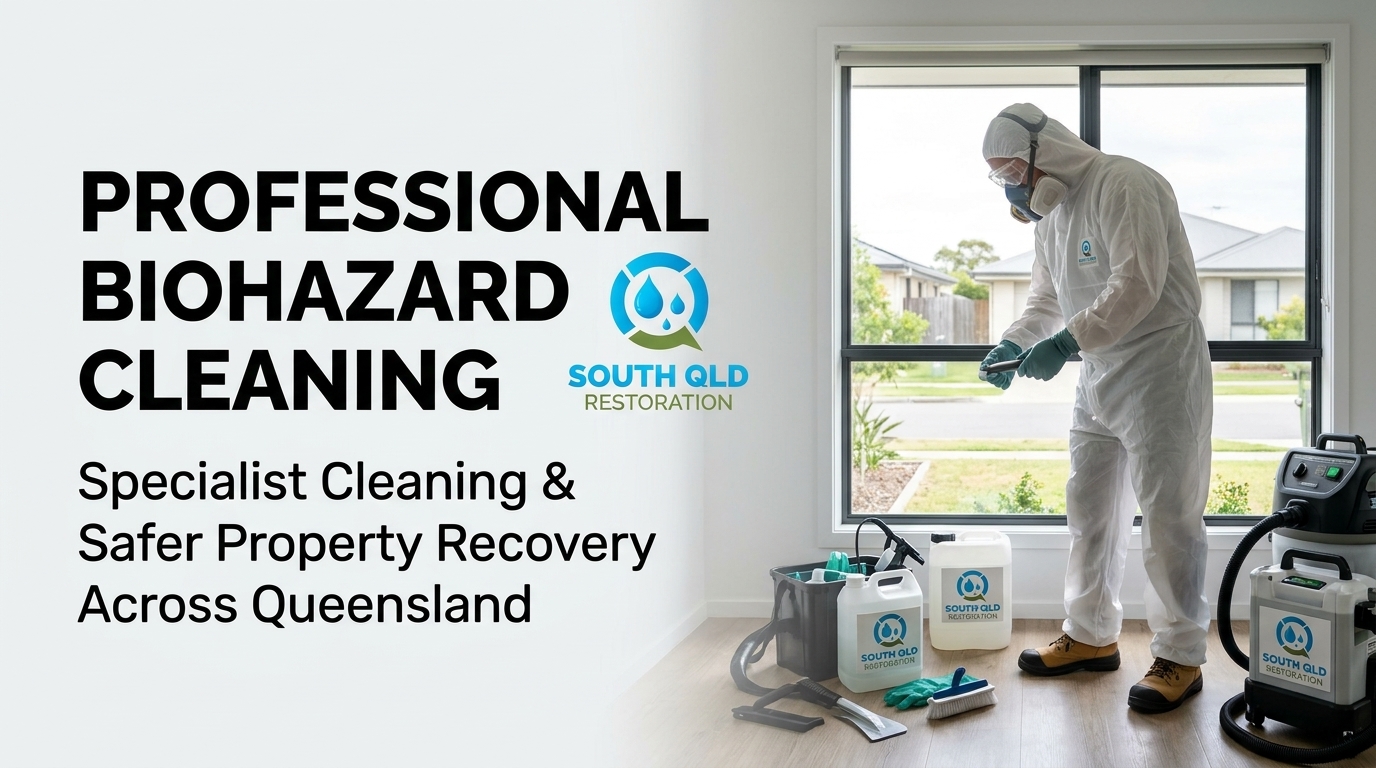
Specialist Cleaning, Discreet Support and Safer Property Recovery
When a property is affected by biological contamination, ordinary cleaning is rarely the right response.
Sewage overflows, contaminated floodwater, bodily fluids and severely unsanitary conditions can create exposure risks, damage building materials and leave property owners unsure where to begin.
For homeowners, landlords, strata managers and businesses across South East Queensland, professional biohazard cleaning starts with a clear assessment of the contamination, careful control of affected areas and a practical plan for cleaning, disposal and restoration. Sensitive situations also demand privacy, respect and straightforward communication.
Biohazard cleaning—also known as biological hazard cleaning or biohazard remediation—addresses materials that may contain harmful biological agents. Unlike a routine deep clean, the work may require site-specific risk controls, appropriate protective equipment, specialist cleaning and regulated waste handling.
Potential hazards include contaminated sewage, blood and other bodily fluids, animal waste and certain materials affected by biological contamination. The level of risk depends on the source, the extent of exposure and whether contaminants have reached absorbent surfaces or concealed spaces.
Incidents involving blood or bodily fluids can require controlled cleaning and disposal rather than standard household products. In sensitive circumstances, a professional response should prioritise discretion, respect for those affected and appropriate coordination with the property owner or responsible authority.
The scope of any trauma-scene service should be confirmed with the provider before booking.
Sewage overflows and floodwater affected by wastewater can carry biological contaminants into flooring, wall linings and other materials. Even after standing water is removed, affected porous materials may need further assessment.
Water extraction, cleaning and structural drying should be planned together to avoid overlooking hidden moisture or contamination.
Severely neglected environments can present a combination of biological waste, pests, odours and damaged contents. These properties require a considered approach that distinguishes salvageable items from contaminated materials and respects the needs and privacy of occupants.
Needles and similar sharp objects introduce puncture and infection risks. They should not be handled as ordinary rubbish.
Where sharps are present, engage an appropriately qualified service with suitable collection and disposal arrangements; not every restoration contractor offers this work.
Carpet underlay, timber, plasterboard and other porous materials may retain contamination after visible residue has been removed. An effective response looks beyond surface appearance and considers whether materials can be cleaned or must be replaced.
Moving contaminated contents or using unsuitable cleaning methods can spread material into unaffected areas. Access controls, appropriate work practices and careful waste handling help reduce that risk.
Physical removal of contamination is a critical first step. Disinfection may then be appropriate for specific surfaces and hazards, using products according to their labels and the relevant safety requirements.
No single chemical or method is suitable for every incident.
Identify the contamination source, affected materials, potential exposure routes and any immediate access restrictions. Explain what can reasonably be restored and what may require removal.
Establish controls suited to the risk, including restricted access, protective equipment and measures to limit the movement of contaminated materials.
Remove contamination and assess impacted contents and building materials. Cleaning methods should suit the material, the hazard and the extent of damage.
Apply disinfection where appropriate and arrange disposal through suitable waste streams in line with applicable Queensland requirements.
Review the completed work, identify any outstanding concerns and determine whether drying, repairs or further specialist assessment are needed before normal use resumes.
Biohazard remediation should be guided by risk assessment and applicable work health and safety duties.
Safe Work Australia’s guidance on managing biological hazards at work explains the importance of identifying hazards, choosing effective controls and reviewing their effectiveness. Requirements for transporting and disposing of contaminated waste depend on the waste classification and the circumstances of the job.
Property owners should ask prospective contractors how they assess contamination, protect workers and occupants, manage waste and document the agreed scope. Industry credentials can be useful, but any claimed certification should be checked for its relevance to the specific service required.
A reliable specialist cleaning provider should be able to explain the proposed approach in plain language—not simply promise that a property will be “100% safe”.
Before approving work, ask about experience with similar incidents, safety controls, likely material removal, disposal arrangements, timeframes and any limits to the service.
South QLD Restoration provides cleaning and property restoration services in South East Queensland. For an incident involving suspected biological contamination, contact the team with a brief description of the affected area and ask which specialist services and locations are currently supported.
An initial discussion can help establish the next appropriate step.
No. Deep cleaning targets ordinary dirt and grime. Biohazard cleaning adds hazard assessment, exposure controls and potentially specialist waste handling where biological contamination is suspected.
Yes. Contamination may remain in porous materials or concealed areas. The need for further work depends on the incident and the materials affected.
Timeframes vary with the size of the area, contamination source, access requirements and whether materials need removal or drying. A site-specific assessment is the best basis for an estimate.
No. The need depends on the water source and whether biological contamination is present or suspected. Sewage-affected water generally requires additional precautions.
Biological contamination can be disruptive and, at times, deeply sensitive. Prompt assessment, appropriate safety controls and clear communication make the recovery process more manageable.
South QLD Restoration lists Brisbane, Cairns, Gold Coast, Ipswich, Logan, Redland Bay, Sunshine Coast, Toowoomba and Townsville among its website locations, alongside broader Queensland and New South Wales coverage.
Availability of specialist biohazard cleaning for a particular location or incident should be confirmed directly with the team.
If you are dealing with suspected contamination in Queensland, contact South QLD Restoration to discuss your situation, confirm the services available in your area and request guidance on the next steps.

Mould is a common problem in homes and commercial buildings across South East Queensland. The warm climate, humidity, water damage,...

Selling your house isn’t as easy as putting up a ‘for sale’ board and just sitting back waiting for prospective...

Professional Tile Cleaning Tips You Need to Know for Beautiful Tiles People love to choose tiles for their home because...

Call Us Anytime
1300 762 021


 South QLD Water, Fire, Mould, Restoration
6/140 Wecker Road, Mansfield

Please provide below details.